Tuesday, November 20, 2012

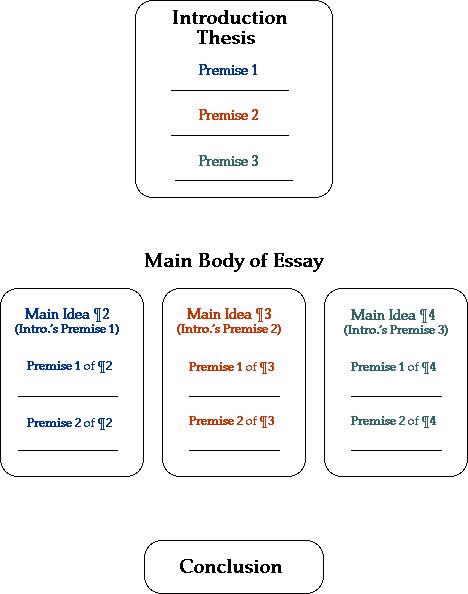
"5-Paragraph Essays Allow Students to Say Nothing in an Organized Way"

 5-paragraph essays allow students to say nothing in an organized way.


I have been trying to track this tweet back to its source, but I can't.  It is flying around the #ncte12 Twitter feed--retweeted by so many people that I can't figure out who actually said it in a session. 

Whoever said it, THANK YOU.  I've been arguing against this structure for years, but this one line captures my feelings about the five-paragraph essay.

We owe it to our students to invited them to write authentic pieces for authentic audiences.  We must teach them the essential skills of writing and allow them to write about topics they care about.  All kids--even the ones that struggle with organization, deserve that.


Here are just a few a few interesting links on the subject:

Death to the Five-Paragraph Essay
If You Teach or Write 5-Paragraph Essays, Stop It
Teaching Writing:  5-Paragraph Essay is Not the Answer

Sunday, November 18, 2012

NCTE Reflections

On the flight home from NCTE I had a long time to think about what I learned there, the trends I noticed, and what I want to put into practice right away...5 whole hours awake on a red-eye can be great for reflection.


My top 5 moments from NCTE:

1.  Presenting with Melissa.  It was wonderful to have a partner to share the journey with and who taught me so much about how to craft an effective presentation.   I believe that people left our session having learned something new and useful.
Proof that we presented

Our standing-room only crowd
2.  Listening to Sir Ken Robinson with thousands of other dedicated professionals.  I was charmed by his sense of humor and reinvigorated by his call for sweeping changes in education that begin in each person's classroom.

 
3.  Learning from my teaching heroes in an intimate setting.  Though NCTE is a huge conference, the sessions are small and allow for a sharing of ideas.  I was lucky enough to attend sessions with Ralph Fletcher, Georgia Heard, Laura Robb, Matt Glover, Ginny Lockwood, Kathy Collins, Stephanie Parsons, Donalyn Miller, and my new teaching heroes--Kristin Ackerman and Jennifer Mcdonough.  Everywhere I turned I found inspiration.  I also found comfort in the way these mentors presented their ideas--they are still forming them, toying with them, changing them. 
Ralph Fletcher

The Two Sisters!  Joan and Gail sitting in front of me in Kristin and Jen's presentation

The Nerdy Book Club session
 4.  Listening to Natalie Merchant perform the poems-turned-songs from the collection Leave Your Sleep.  She reminded us all about the power of poetry for children (and adults!).
 5.  Being stopped by someone in a hallway in the conference center who said, "I loved your presentation yesterday."  That brings me back to my first favorite moment... 

My Top 5 Action Items:
  1. Find a few teachers who will try Biblionasium with their students to create stronger communities of readers.  Thanks, Nerdy Book Club, for that idea.
  2. Urge all teams K-6 to plan at least one non-genre-specific writing workshop unit.  Thanks, Matt Glover, for reminding me why that's important to kids.
  3. Find one classroom teacher who will allow me to try out Georgia Heard's poem-a-week model for poetry instruction (Tanya, if you are reading this...)
  4. Visit the DailyCafe website to follow Kristin and Jen's progress with their ISCORE writing concept and design lessons for our teachers.  Their idea is fantastic--let's not compartmentalize the writing lessons we teach by genre.  Let's teach kids that good writing is good writing, no matter what the genre.  Good writing has Ideas, Structure, Conventions, One Focus, Real Voice, and Elaboration.  Let's set up those concepts just as we do with the Daily 5 and Cafe menu.
  5. Work with Melissa on an in-house presentation on knocking down the classroom walls--how to use technology to broaden our students' writing and reading lives beyond the classroom.

My Top 5 Realizations and Reminders:
  1. Ralph Fletcher shared that he is rethinking mentor texts. (Wait, he wrote the book on mentor texts!)   He is thinking that perhaps it is better to provide kids with examples of great writing and see what the kids find, rather than saying, "Kids, this piece uses excellent similes."  He's rethinking his work with mentor texts to balance the teacher-directed and student-led noticings.  I heard this idea in more than one session--this reminder that we should trust the kids to make their own discoveries, even if they aren't what we intended.
  2. Student choice continues to be at the center of student engagement and achievement.  This choice is important in all areas of their day--what they read, what they write, what they discuss, and how they think.  Ginny Lockwood demonstrated a mistake so many of us make when doing a read-aloud--directing the kids on how to feel about something in the book.  Let's work on shutting up and letting the kids think!
  3. Teachers of reading and writing must be readers and writers themselves.  I must work to encourage this with the teachers.  Our kids must see that we build reading lives.  And the only real way to name what they are struggling with as writers is if we are writers doing the work we ask our kids to do.
  4. When we catch ourselves saying, "These kids don't..." or "These kids can't..." then it's time for a gut-check.  What are we doing to make kids BE school instead of DO school.  It is our own fault when they ask questions like, "How long does this have to be?" or "When I'm done with this can I..." or when we say things like, "What I'm looking for is..."  Kids came to school as joyful, creative creatures.  There's nothing to blame but SCHOOL when kids lose that.
  5. 93% of a teacher's day is spent in isolation (from other adults)!  When is the time for collaboration, deep reflection, and planning?  How can we allow more time for the collaborative planning and reflecting side of teaching that is just as important as the time spent in the classroom with kids?

NCTE 2012 Presentation: iPads in Language Arts

Here's our presentation
Just a screenshot!  Click on the link to see the video on YouTube


And here are our app handouts for Writing, Reading, and Word Study

Friday, November 2, 2012

How did you get this way?

I've been asked this question twice in one week.  So I suppose it's time to think of an answer.

First, let me clarify the question.  They wanted to know how I became the teacher I am now--how my philosophy of education has evolved into its current "progressive" state.  One of Seth Godin's recent blog posts has helped me realize my answer:


Who you hang out with determines what you dream about and what you collide with.
And the collisions and the dreams lead to your changes.
And the changes are what you become.
Change the outcome by changing your circle.


I have had the chance to collide with a wonderful assortment of people throughout my 18 years in education.  I have changed my circles every 5-7 years, moving from two public high schools schools in Howard County, Maryland to the SEED School of Washington DC (a middle and high charter boarding school) to  Flint Hill School (a JK-12 independent school).  In each school I have found adults who have challenged, shaped, and supported my views about education.  And I have been lucky enough to have students who have let me try out these views.

Thursday, September 6, 2012

Dipping my Toe into Infographics

I spent hours today trying out different infographic design tools and making my first infographic.  After visiting many sites, I made my choice: Easel.ly.  This website is still in beta form, so its features will probably improve, but this was, by far, the most user-friendly infographic generator I tried.  Users select a theme and get going right away. 

The toolbar looks like this:
The workspace looks like this:
My first attempt looks like this:
I know it's not very fancy or text-rich, but I think it will work for now.  Thanks, Easel.ly, for really making it easy!

Monday, August 13, 2012

On the eve of returning to work, for my daughters, 6 and 9

So.  This is it.  The year of no homework.  The year of no worksheets.  No desks in rows.  This is the year of "what if" instead of simply "what."  After swimming around in our faculty summer reading of Tony Wagner's Creating Innovators, surely we are all ready for a year of igniting creativity, nurturing bravery, and challenging the real or imagined barriers students carry to school.  

Right?  

It has to be, because this is our chance to leap into whatever magic is through the portal, glittering not so far away.  If we wait, if we hesitate even one day more, the portal will pass and we will be stuck in rows and worksheets and rote memorization and complacency for another school year.

So.  As a parent I will be my children's advocate.  As an educator I will be your children's advocate.

My inspiration for my work this year comes from this poem I found in a book marked for Goodwill, If You're Not Here Please Raise Your Hand, by a former teacher, Kalli Dakos:

"The Wind is Calling Me Away"

How can I sit through one more day,
For the wind is calling me away,
And I want to change with the leaves that fall,
But I'm here in school and I'm missing it all.

While leaves as bright as the sun fly by,
We add, subtract, and multiply,
And none of these numbers makes sense to me,
When the sky is as blue as the summer sea.

Oh, teacher, please let's race the leaves,
Let's jump in piles and climb in trees,
Let's add, subtract, and multiply,
The wind, the leaves, and the deep blue sky.

--Kalli Dakos

And one more, just because in my crusade to make school different, I can't forget about my first passion, the fight to make reading wonderful.

"I Have No Time to Visit with King Arthur"

I have no time to dream a dream,
Or think a splendid thought,
Or visit with King Arthur
In the land of Camelot.

I've underlined one hundred nouns, 
And circled thirty verbs,
While wishing that this workbook
Had a story to its words.

I could travel to another time
With Huck Finn on his raft,
Or read a poem by Silverstein 
That really makes me laugh.

Instead I fill in compound words,
A neverending chore:
How I long to be with Gulliver
On a strange and distant shore!

Nouns and verbs and compound words
Are sad and dull and stale,
Unless they're fired with the spark
Of a mighty, wondrous tale.

--Kalli Dakos


Friday, June 22, 2012

Summer Reading Begins

Since my twitter handle is "bookcrusader," it's time that I posted about a few good books.  In the past few weeks I've read a mix of literary fiction, nonfiction, and young adult fiction.  I highly recommend each of these:

Creating Innovators by Tony Wagner
This interesting and motivating book challenges parents, companies, and schools to nurture innovation by doing things differently.  Parents should encourage their children to explore their passions, even when those passions fall outside the "mainstream."  Parents should give their children freedom (but not at the risk of their safety!) and support, prioritize play, and promote reading.  Educators must overhaul school so that it is a place where children tinker, think, create, play, and collaborate.  Companies must reconsider how they manage and train their employees to leverage everyone's talents.  Tony Wagner's PLAY + PASSION = PURPOSE is an equation we should all be following.

State of Wonder by Ann Patchett
Now, for an escape from reality, this book offers the reader a trip deep into the Amazon and even deeper into the ethics of a pharmaceutical company.  What happens when a scientist knows she is developing a drug that will not bring in a profit for the company but will save thousands of lives?  Can she manipulate the system so that everyone is happy?  There are so many layers of plot in this book, from pregnant 73-year-olds to a mysterious death to a secret romance.  It took me two days to journey through this; I only wish it could have taken longer.
Trouble by Gary D. Schmidt
This YA novel is heavy; Henry learns fairly quickly that his father could not have been more wrong when he said that if you build your house far enough away from trouble, trouble will never find you.  Henry and his family face trouble when Franklin, the oldest son, is hit by a car and hospitalized with "indeterminate brain activity."  Worse, his sister's secret boyfriend, Chay Chouan, a Cambodian immigrant, is accused of driving the truck that hit and eventually killed Franklin.  Henry is left to resolve his feelings for his brother and Chay Chouan without the support of his parents, who are too lost in their own sorrow to be of any use to him.